A chapter of HFR’s Complete Buyer’s Guide to High-End Audio
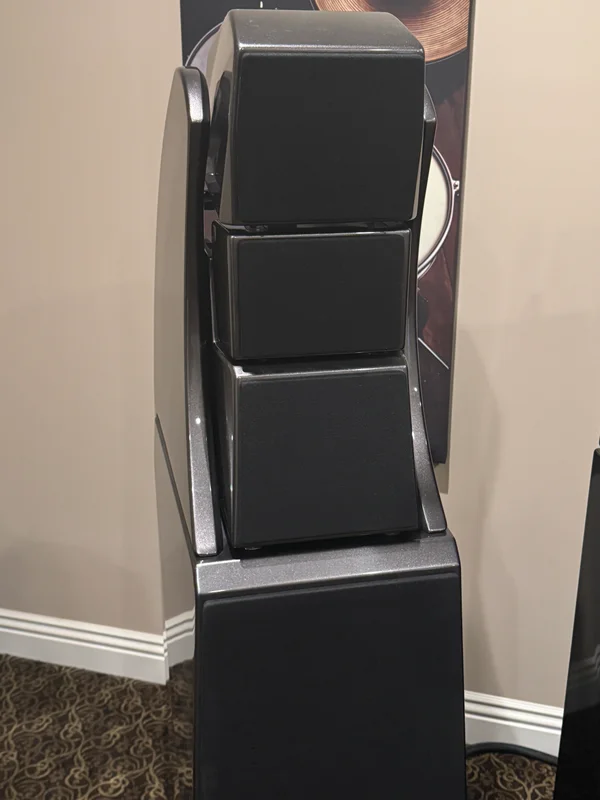
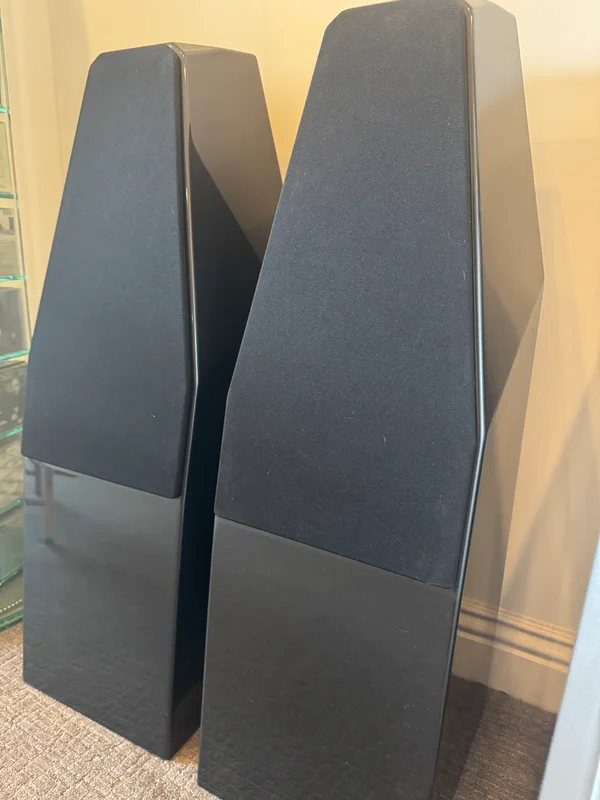
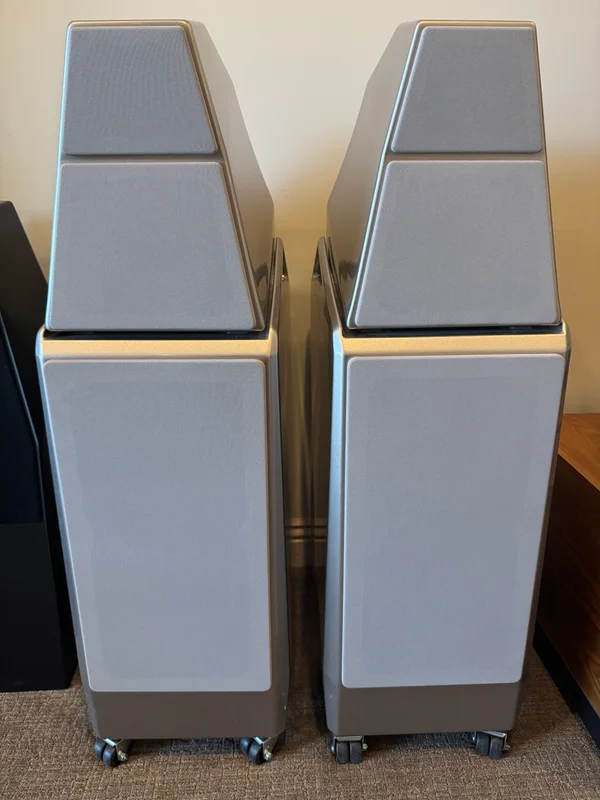
Wilson Audio has spent five decades making some of the most exacting loudspeakers in the world. Founded in 1974 by David and Sheryl Lee Wilson in a garage in Novato, California, and moved to Provo, Utah in the early 1990s, the company builds each speaker by hand to tolerances that most manufacturers would find uneconomical and most owners will hold onto for a generation.
Buying a used Wilson is not the same as buying used speakers. The build quality means that a well-cared-for pair from twenty years ago still performs to its original specification. Wilson stocks replacement parts for every model it has ever made. And, for buyers who want factory-underwritten assurance, Wilson operates a formal certification program — the only program of its kind in high-end audio — that puts a manufacturer warranty on second-owner speakers.
This guide covers what to know before spending $10,000 to $850,000 on a used Wilson: the models, the generations, the Certified Authentic program in detail, what to inspect, what the used market values, and how to buy well.
Two facts about Wilson matter to a used buyer more than the reviews or the awards. First: the speakers are built to be usable for decades, not years. Second: Wilson stocks parts for every model it has ever manufactured across its 45+ year history. Both are unusual in high-end audio, and both are what make the used market for Wilson genuinely different from the used market for most brands.
The Wilson Model Timeline
Wilson’s model history divides neatly into two eras: the WATT/Puppy era (1985–2011), and the current era of specific-model families that emerged after the WATT/Puppy was retired.
The Sabrina debuted in 2015 as Wilson’s entry-level floorstander, followed by the SabrinaX in 2020 and the Sabrina V in 2025, continuing to serve as the company’s most compact and accessible tower model. The TuneTot standmount, introduced in 2018, gives buyers Wilson build quality and voicing in a bookshelf format.
Autobiography (2026)
Wilson’s most recent floorstander, the Autobiography, made its official debut on April 24, 2026, added to the upper regular-production range alongside the Chronosonic XVX and Alexx V. Wilson brought the model to select authorized dealers as part of a worldwide launch tour — LMC Home Entertainment in Scottsdale hosted a debut event on May 22, 2026 after receiving its first pair in Quartz paint finish on May 20. Wilson’s own launch language describes the model as the story of Wilson Audio in form — a chronicle of five decades of Wilson design language expressed in a single reference. Because it is so new to the market, secondary-market inventory is not yet meaningful; buyers considering a used Autobiography should expect authorized-dealer channels only until at least 2027–2028.
Discontinued and specialty
Older Wilson models still on the used market include the Sophia (three series, discontinued 2018), the Duette (compact floorstander, several generations), the Yvette (2017 floorstander below the Sasha), the Polaris (short-cabinet floorstander for architectural constraints, 2010–2020), the MAXX series (large floorstander, three series, discontinued), the Alexandria and Alexandria XLF (statement floorstanders, discontinued 2018–2023), and Wilson’s home-theater center channels and subwoofers (Watch Dog, Thor’s Hammer, WHOW). Wilson supports and can supply parts for all of them.
Never Titled: eligible for the full 5-year warranty.
Pre-Owned or Factory Tested, less than 10 years old: remainder of the 5-year warranty or a 3-year warranty, whichever is greater.
Pre-Owned or Factory Tested, more than 10 years old: 2-year warranty.
Certified Authentic pairs listed by authorized Wilson dealers on HFR carry a visible CA badge and, where the dealer has specified it, the specific tier. You can filter for Wilson Certified Authentic listings directly.
The single most misunderstood fact about Wilson speakers, in the second-hand market, is that a Wilson set up incorrectly is a different loudspeaker from a Wilson set up correctly. This is not audiophile mythology. It is an engineering position that Wilson has documented in every owner’s manual it has ever published, enforced in its warranty policy, and built into the physical design of every current-generation model. Wilson’s Alexx owner’s manual states directly that setup errors “will void your Wilson Audio Warranty.” That is not marketing language. It is contract language.
Why WASP exists
Wilson’s designs are built around time-domain alignment between drivers — the specific engineering pursuit David Wilson began in the 1970s with an RTR electrostatic supertweeter hung from the ceiling on airplane wire. Every current model provides some mechanism for the installer to dial driver positions into precise phase alignment for the specific listening seat in the specific room. The Sasha V and up have adjustable spikes and step-adjustable module rake angles. The Alexx V uses a full open-gantry structure with tweeter position adjustable to within 1/16 inch — less than 5 microseconds of sound-travel time, below the ear’s time-resolution threshold. Without that adjustment, the drivers are physically capable of the performance the reviews describe but are not delivering it.
Wilson’s authorized dealers are trained in WASP as a condition of authorization; some — Wilson’s Peter McGrath, and dealer specialists like Innovative Audio’s Chris Forman — travel to installations across their regions. Every new pair sold through an authorized dealer includes professional in-home installation as part of the purchase price.
Practical implications for a used buyer
First: if the speakers are purchased through Wilson’s Certified Authentic program and delivered professionally by the selling dealer, WASP setup is typically included as part of the transaction. Confirm this specifically with the dealer, and confirm the length of the setup visit (a proper WASP session commonly runs three to six hours per pair on complex models).
Second: if the speakers are purchased private-party or shipped freight without dealer installation, the practical options are hiring an authorized Wilson dealer in your area to do a paid installation (most will, for a fee typically running $500 to $2,000 depending on model complexity and distance), or doing it yourself following the Wilson manual. Doing it yourself is possible for someone patient and methodical — the Zone-of-Neutrality methodology is genuinely walkable by a single person — but caps the Wilson warranty at one year regardless of the speaker’s age or certification tier.
Third: the sound of a well-set-up Wilson is materially different from the same speaker installed casually. This is the largest reason a buyer might choose a Certified Authentic purchase from a nearby dealer over a private-party pair at a lower price. In Wilson’s world, the installation is part of the product.
Break-in
Wilson does not publish a specific break-in target, but reviewers consistently report meaningful sonic evolution over the first 150 to 400 hours of use, with the largest changes in the first 50-100 hours. A well-broken-in used unit is a genuine advantage over a new pair.
What to Look for When Buying Used
Wilson speakers are unusually durable. That does not mean every used pair is a good buy. What follows is a checklist for evaluating a used Wilson listing — either before making an offer or before accepting delivery.
Cabinet finish
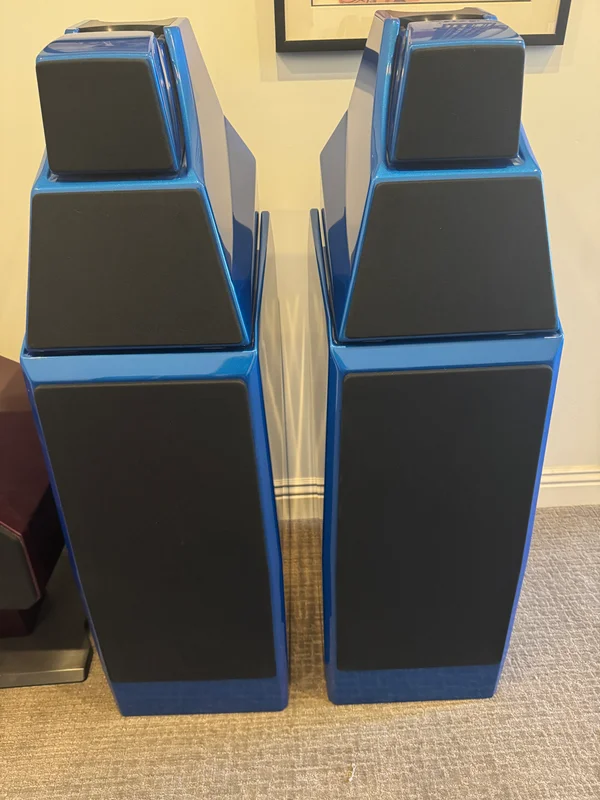
Wilson’s paint finish, marketed as WilsonGloss, is a multi-stage automotive-grade process applied at the factory. Standard colors are included in the purchase price; custom Paint-to-Match colors are available at additional cost, and Wilson stores the exact formulation of every custom color at the factory for future touch-ups. This matters to the used buyer for two reasons. Original finishes hold up extremely well over decades; any refinishing done outside Wilson or an authorized dealer is generally visible on close inspection. If the seller mentions a repaint, confirm who did it.
Drivers
Wilson’s driver history is well-documented and each model uses a specific driver complement. If a listing describes a replaced driver, ask when it was replaced, by whom, and whether the replacement was a factory-supplied Wilson part or a substitute. Wilson supports factory-original replacement drivers for every model it has ever built, including decades-old WATT/Puppy pairs. Non-factory driver replacement compromises the crossover matching Wilson designed the speaker around.
Crossovers and resistors
Wilson’s crossover design uses resistors that are considered a service item — they drift slightly over time and are routinely replaced as part of the Certified Authentic recertification process. If you’re evaluating a non-CA private-party pair, the resistor age matters. Ten- or fifteen-year-old crossovers without service history won’t destroy the speaker, but they will not be delivering exactly the frequency response the speaker was designed for. Ask when, if ever, the resistors were last replaced.
Included hardware and tool kit
Every new Wilson pair ships with a complete tool kit for spike adjustment, driver access, and setup, plus original documentation and finish-specific hardware (grilles, badge, connector caps). Because Wilson’s spikes and spike-adjusters are model-specific and not stocked at hardware stores, missing accessories are more expensive to replace than a buyer might expect. A listing that includes the original tool kit and hardware is more valuable — and more clearly authentic — than one that does not.
Original crates
Wilson ships every pair in custom wooden crates built for that specific model. The crates matter more than they seem to. A Wilson speaker in original crates can be shipped by freight to virtually anywhere in North America safely; a Wilson speaker without original crates cannot be shipped safely without spending hundreds to build custom crates. If a seller does not have the original crates, the ability to ship the speakers is meaningfully compromised, and the price should reflect that.
Serial numbers and factory registration
Every Wilson pair has serial numbers on both cabinets. Authorized dealers can verify a serial number’s registration history directly with Wilson. If a listing shows a photo of the serial plate, note it, and either the buying dealer (if going CA) or Wilson themselves (for private-party) can confirm the manufacturing year and any prior warranty registration.
Installation history
A Wilson pair professionally installed once, left in the same room, and never moved is worth more than a pair that has passed through three owners and been shipped twice. Every reinstall introduces the possibility of driver alignment being lost, cabinet corners chipping in transit, and hardware wearing. Ask how many times the speakers have been set up and by whom.
Red flags
Reasons to walk away, or to require a substantial price discount:
Refinishing done by a shop with no Wilson affiliation and no factory paint match
Driver replacements from a non-authorized source or unknown provenance
No original crates and a seller unwilling to build professional freight crates
Serial numbers that don’t align with the seller’s stated ownership history
No dealer relationship documented, and no willingness to have the speakers Wilson-verified before purchase
None of these individually is disqualifying. All of them are worth pricing in.
Wilson on the Used Market
Wilson speakers depreciate more slowly than most high-end brands, for a few structural reasons: the build quality that makes twenty-year-old pairs still perform, Wilson’s ongoing parts and service support for every model ever made, and the existence of the Certified Authentic program itself, which creates a manufacturer-supported channel for used inventory and puts a floor under dealer trade-in valuations. What that adds up to for a buyer is a used market where a Wilson pair five to ten years old often trades at 55–70% of its original list price if condition and provenance are strong.
That depreciation pattern is not uniform, and understanding where it isn’t uniform is worth some money.
Generational transitions compress prices for the outgoing model. When Wilson releases a “V” revision of a series — the Sasha V replacing the Sasha DAW in 2023, the Sabrina V replacing the SabrinaX in 2025, the Alexia V replacing the Alexia Series 2 in 2022, the Alexx V replacing the Alexx in 2021 — the previous-generation pair drops in secondary-market value for roughly twelve to eighteen months as trade-ins hit the market. This is the classic used-market opportunity in Wilson: an outgoing-generation flagship, three to five years old, sold Certified Authentic Factory Tested, at a materially better price than the same money buys in the current lineup below it.
The “DAW premium” is real. The Sasha DAW, in particular, commands a premium among the discontinued Sasha generations because of its association with David Wilson’s memory and because reviewer consensus placed it as the strongest Sasha to that point. Similar dynamics exist around David Wilson’s final flagship, the WAMM Master Chronosonic, and around any limited-edition Wilson product.
Condition and completeness matter more than mileage. A Wilson pair sold with original crates, complete tool kit, original documentation, and a documented single-owner installation history typically trades 10–20% above an otherwise identical pair missing any of those elements. The delta compounds at higher price points; on a $100K+ pair, missing original crates alone can move the transaction by mid-five figures because the buyer either accepts significant shipping risk or pays for custom crates.
Certified Authentic pairs typically transact 10–20% above private-party comps. The premium reflects the warranty, the dealer relationship, the recertification, and — for many buyers — the fact that professional installation is often bundled into the transaction.
Room and System Matching — What Wilson’s Impedance Curves Actually Demand
Wilson speakers reveal upstream. This is a design decision, not an accident. The drivers, cabinets, and crossovers are engineered to pass through what the amplifier and source are actually delivering — which is what makes Wilson so consistently reviewed as accurate, and what makes them punish a mismatched system. The single largest source of buyer disappointment on the used Wilson market is not condition or model choice; it is amplifier mismatch. This section is worth reading before you finalize an amplifier decision.
What Wilson’s impedance actually looks like
Wilson speakers rate their nominal impedance at 4 ohms, but the actual impedance curves are considerably more demanding than that number suggests. Every current Wilson floorstander dips well below the nominal into ranges that will stress most amplifiers:
A specification of “100 watts into 8 ohms” is meaningless for Wilson. What matters is the amplifier’s ability to double down into 4 ohms and again into 2 ohms — genuine current delivery, not headline wattage. Amplifiers that lose composure or protection-limit into low impedance will make a Wilson sound polite, closed-in, and dynamically constrained — the opposite of what these speakers are known for when properly driven.
High-power solid-state: the safe path
The dominant partnership across Wilson’s authorized-dealer network is high-current solid-state amplification. Dan D’Agostino (Momentum, Progression, and Relentless) has appeared for years in Wilson’s own show demonstrations, and in D’Agostino’s own listening room, where he runs a full Relentless system driving Wilson Chronosonic XVX. Boulder Amplifiers, Gryphon, and Burmester appear regularly in flagship demonstrations and dealer reference systems. Pass Labs has been a long-standing partnership for the mid-lineup. All of these brands share the design priorities Wilson’s impedance curves demand: current delivery into low impedances, low output impedance, and neutral tonal balance.
Tube amplification: possible, with caveats
Tube amplifiers can and do drive Wilsons well, but the amplifier selection is narrower and the setup considerations are stricter. The nominal 4-ohm speaker impedance intersects with tube-amp output taps in a specific way. Wilson designer Credille has stated that “on tube amps with multiple taps, we have found that the 8-ohm tap generally works the best” — counterintuitive but confirmed in listening tests with multi-tap designs. Try both taps before committing. Tube amplifiers with lower output impedance (typically higher-powered push-pull designs) will typically drive Sasha and Alexia successfully; small single-ended triode designs will not deliver the current these speakers need. Wilson has historically shown at trade events with VTL, Audio Research, and Nagra tube amplification.
By model tier
Sabrina, TuneTot, WATT/Puppy: the least demanding Wilsons on the amplifier. Almost any competent 100+ watt/8Ω amplifier will drive them. Tubes work well here.
Sasha V, Yvette: any competent 200W/8Ω solid-state amplifier will drive them cleanly. Higher-power tube amps work, with the caveat about output taps.
Alexia V: demands a serious amplifier with genuine current delivery. Small triode tube amplification is a mismatch.
Alexx V: the difficult step. Genuine low-impedance current delivery is mandatory — if your amplifier of interest cannot double down into 2 ohms, it is not the right partner.
Chronosonic XVX and Autobiography: the top tier of the ownership question. Amplifier choice is not preference but prerequisite.
Room size
Wilson’s model hierarchy roughly maps to room volume. Sabrina and TuneTot are designed for 150–300 square feet. Sasha V, Yvette, and The WATT/Puppy work well in 250–500 square feet. Alexia V wants 350–650 square feet. Alexx V, Chronosonic XVX, and Autobiography are large-room speakers that need at least 500 square feet and reward significantly more. The single most common mistake in the used Wilson market is buying too much speaker for the room. An Alexx V in a 250-square-foot listening space cannot produce the presentation it is designed for; the drivers have no room to develop and reflections dominate. A Sabrina or a Sasha in the same room, driven well, will substantially outperform an under-utilized flagship. Room first, model second.
Source components
Wilson pairings at the flagship level tend toward dCS (Vivaldi, Rossini) for digital, and VPI, TechDAS, and Kuzma turntables for vinyl. There is no “official” source partner and other well-engineered sources drive these speakers well; the pattern above reflects what appears repeatedly in show demonstrations and reviewer systems.
Frequently Asked Questions
What is Wilson Audio Certified Authentic?
Wilson Audio Certified Authentic is a formal certified pre-owned program run by Wilson Audio and its authorized North American dealers. Under the program, a used Wilson speaker is recertified against Wilson’s factory standards through an 80+ point inspection — including resistor replacement, driver torque adjustment, measurement testing, and cosmetic refurbishing — and enters the program with a Wilson-backed factory warranty. It is available exclusively through authorized Wilson dealers in North America.
What's the difference between Field-Certified, Factory Tested, and Never Titled?
Pre-Owned (Field-Certified) means an authorized Wilson dealer performed the certification at their facility. Factory Tested means the speakers were sent back to Wilson’s Provo, Utah factory for full recertification using the same tests Wilson uses on new speakers. Never Titled means the speakers were opened but never sold — dealer demos, show loaners, and open stock. Never Titled carries the strongest warranty because the speakers have no prior owner.
Does a used Wilson come with a warranty?
Only if it is enrolled in the Certified Authentic program. Wilson’s standard 5-year new-speaker warranty is non-transferable when speakers change hands privately. Under Certified Authentic, warranty length depends on tier and age: Never Titled speakers get the full 5-year warranty; Pre-Owned or Factory Tested speakers get the remainder of the 5-year warranty (or 3 years, whichever is greater) if under 10 years old, or 2 years if older. Private-party purchases outside the program carry no manufacturer warranty of any kind.
Do I need professional installation for a Wilson?
Not for Certified Authentic warranty eligibility — Wilson’s published program terms don’t condition warranty length on who installs the speakers. But installation still matters enormously for sound quality: Wilson’s designs depend on precise time-domain alignment between drivers, and its own owner’s manuals state that setup errors can void the warranty outright. Wilson trains its dealers in a proprietary procedure called WASP (Wilson Audio Setup Procedure), and a correctly set-up Wilson sounds materially different from one installed casually.
What's the best used Wilson to start with?
The Sabrina series (Sabrina Series 1, SabrinaX, or Sabrina V) is Wilson’s entry point and works in smaller rooms. For buyers with room for a two-piece floorstander, a Sasha DAW (2019–2023) or an outgoing-generation Sasha Series 2 (2014–2018) at Certified Authentic pricing gives most of the Wilson experience at a fraction of new-Sasha-V cost. Match the model to the room, not to the ambition.
How much does a used Wilson depreciate?
Wilson holds value more strongly than most high-end brands. A five- to ten-year-old pair in good condition typically trades at 55–70% of original list price. The strongest secondary-market values are on outgoing-generation models one or two years after a “V” revision replaces them, particularly under the Certified Authentic program.
Where can I buy Certified Authentic Wilson speakers?
Only through authorized Wilson dealers in North America. On HiFi Registry, Certified Authentic listings from authorized Wilson dealers carry a CA badge and can be filtered directly.
Can I ship a Wilson safely without the original crates?
Not safely. Wilson ships every pair in custom wooden crates designed for that model. Freight transport without those crates is high-risk; custom crating for shipment can be built by specialty audio movers or by an authorized dealer but costs hundreds to low thousands depending on model.
Are older Wilsons still supported by the factory?
Yes. Wilson stocks parts for every model it has ever manufactured, going back to the 1980s WATT/Puppy series. This is unusual in high-end audio and is one of the strongest arguments for buying a used Wilson over a comparable used speaker from a manufacturer with more limited parts support.
What's the difference between Wilson WATT/Puppy and Sasha?
The WATT/Puppy was Wilson’s iconic two-piece platform from 1986 to 2011, spanning eight generations. When Series 8 was retired in 2011, the Sasha W/P (2009) took over as its successor, using the same two-box format but a clean-sheet design. In 2024, Wilson relaunched the platform as The WATT/Puppy for the company’s 50th anniversary, using current drivers and materials.
How can I tell if a used Wilson has been properly maintained?
Look for original crates, complete tool kit, original documentation, and — ideally — a service history noting resistor replacement, any driver work, and installation records. A pair sold Certified Authentic has been through this evaluation formally. A private-party pair without documented service history is not disqualifying but should be priced accordingly.
Are Wilson speakers worth buying used?
For buyers who want Wilson-level performance without new-Wilson pricing, yes. Wilson’s build quality, ongoing factory support, and the Certified Authentic program make the used market genuinely viable rather than a compromise. The two rules that matter most: buy the right model for the room, and either buy Certified Authentic or budget for professional setup by an authorized Wilson dealer.
Authorized Wilson Dealers on HFR
Wilson’s dealer network is small and deliberately curated. Authorization is granted based on demonstrated expertise in Wilson’s setup methodology, physical showroom facilities capable of properly presenting the speakers, and a commitment to the ongoing customer support Wilson expects for its brand. Only authorized dealers can sell new Wilson product, participate in the Certified Authentic program, or provide Wilson-warranty-eligible installation.
LMC Home Entertainment is a Wilson Audio Authorized Dealer and Wilson Certified Authentic partner, operating showrooms in Scottsdale and Tempe, Arizona. Alongside Wilson, LMC represents Bassocontinuo, Burmester, Dan D’Agostino, dCS, Linn, McIntosh, Sonus Faber, Sony, and Transparent. LMC was one of the Official Autobiography Launch Partners for the 2026 debut of the Autobiography, hosting a launch-tour event at its Scottsdale showroom on May 22, 2026. LMC’s Wilson Certified Authentic inventory is available through the showroom.
Scottsdale: 15507 N Scottsdale Rd, Suite #135, Scottsdale, AZ 85254 · (480) 403-0011
An authorized Wilson dealer is not just a retailer that carries the brand. Authorization means Wilson has trained the dealer’s installation team in WASP, extended the Certified Authentic program to that dealer for used sales, and stands behind the dealer’s factory-warranty-eligible installations. Buying from an unauthorized reseller — even one advertising “new” Wilson product — voids the factory warranty and disqualifies the speakers from Certified Authentic status permanently.
For a used-market buyer, the practical implication is that transactions with authorized dealers are the ones that carry Wilson’s institutional support behind them. Transactions outside that network do not.
Asking price compared against 11 market transactions averaging $14,656, ranging from $12,900 to $17,900. Compiled from completed sales across the used market, not HiFi Registry transactions.
Asking price compared against 11 market transactions averaging $63,529, ranging from $7,431 to $107,000. Compiled from completed sales across the used market, not HiFi Registry transactions.
Asking price compared against 17 market transactions averaging $13,470, ranging from $10,000 to $18,500. Compiled from completed sales across the used market, not HiFi Registry transactions.
Asking price compared against 6 market transactions averaging $26,248, ranging from $23,000 to $31,995. Compiled from completed sales across the used market, not HiFi Registry transactions.
Asking price compared against 5 market transactions averaging $36,670, ranging from $25,000 to $45,999. Compiled from completed sales across the used market, not HiFi Registry transactions.
Asking price compared against 10 market transactions averaging $5,430, ranging from $2,600 to $16,000. Compiled from completed sales across the used market, not HiFi Registry transactions.
A curated bibliography of the sources cited throughout this Buyer’s Guide chapter. All specialist reviews and manufacturer materials referenced in the sections above are indexed here.
 ✦ Featured